








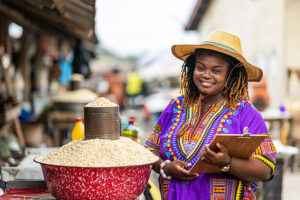

Small and Medium-Sized Enterprises (SMEs) sit at the heart of Ghana’s economy. They are not merely support players in the country’s development story—they are the main engine driving productivity, job creation, innovation, and long-term national resilience. From bustling informal markets to structured manufacturing hubs, SMEs contribute significantly to GDP and employment, shaping the national economic landscape in ways that are often under-reported but deeply impactful.
This editorial by Accra Business News explores how Ghana’s SMEs are driving economic growth, the sectors leading the charge, the challenges they face, and what policy actions or structural support can maximize their economic potential.
The Central Role of SMEs in Ghana’s Economic Structure
SMEs account for an estimated 70% of Ghana’s GDP and over 80% of employment nationwide according to The High Street Business. In both urban and rural settings, SMEs offer accessible income opportunities, act as training grounds for young professionals, and stimulate competition across industries. These businesses operate in diverse sectors, including:
-
Agribusiness
-
Manufacturing
-
Technology and fintech
-
Hospitality and tourism
-
Construction
-
Creative arts
-
Transportation and logistics
Their wide footprint ensures that economic growth reaches multiple layers of society.
1. SMEs as Major Job Creators
Employment creation remains the most direct contribution of SMEs to Ghana’s economy. With a rapidly growing youth population, SMEs serve as the primary employers for new entrants into the job market. Businesses in retail, food processing, digital services, and agribusiness hire thousands of workers—from skilled technicians to unskilled labour—providing livelihoods in communities where formal jobs are limited.
The multiplier effect is substantial: one thriving SME can stimulate secondary employment through supply chains, distributors, logistics providers, and service support businesses.
2. SMEs Strengthen Local Value Chains
SMEs are the backbone of Ghana’s local production systems. They transform raw materials, refine agricultural outputs, and provide essential manufacturing capabilities. For example:
-
Cassava is turned into gari, starch, and flour by small processors.
-
Cocoa is transformed into beverages, soaps, and cosmetics by artisanal producers.
-
Timber SMEs supply furniture, interior décor, and construction materials.
These value-added activities expand export potential, reduce import dependence, and enhance Ghana’s competitiveness in regional markets such as ECOWAS.
3. Innovation and Technology Adoption
A new generation of Ghanaian entrepreneurs is integrating technology into traditional business models. Fintech companies simplify payments and widen financial inclusion. E-commerce platforms provide digital storefronts for artisans and retailers. Transport and logistics SMEs have improved delivery efficiency using mobile tracking and digital booking systems.
This infusion of tech-driven solutions keeps Ghana’s economy adaptive and globally aligned, particularly as digital trade becomes mainstream.
4. SMEs Support Rural Development
Rural-based SMEs—especially in agriculture, food processing, and crafts—play a key role in balanced national development. They help reduce rural-urban migration by creating local employment opportunities. Their operations also stimulate investment in roads, electricity, water, and telecommunications, as community demand grows.
5. SMEs Promote Export Growth
Export-oriented SMEs in shea butter processing, horticulture, cocoa-based products, textiles, and handicrafts are increasingly penetrating international markets. Their ability to compete globally strengthens Ghana’s foreign exchange position and feeds into national revenue streams.
6. SMEs Enhance Economic Resilience
During economic shocks—such as global recessions, pandemics, or disruptions in global supply chains—SMEs often adapt faster than large corporations. Their flexibility, small scale, and localized operations help keep essential services running. They maintain circulation of goods and services, cushioning communities against severe economic downturns.
Challenges Limiting SMEs’ Full Potential
While SMEs play an undeniably strong role in national growth, several constraints persist:
• Limited access to affordable financing
High lending rates and collateral requirements hinder expansion.
• Infrastructure gaps
Unreliable power supply, poor transportation networks, and inadequate storage facilities affect productivity.
• Regulatory and tax burdens
Complex registration processes and inconsistent enforcement discourage formalization.
• Digital literacy gaps
Many SMEs lack the technical skills needed to leverage modern tools.
• Limited export capacity
Quality assurance, certification, and packaging improvements are needed to scale.
Strengthening SMEs for Long-Term National Impact
To maximize the economic contributions of SMEs, a coordinated approach is essential:
-
Government support through tax incentives, simplified regulations, and SME-friendly policies.
-
Financial institutions offering tailored loan products, reduced collateral demands, and credit guarantee schemes.
-
Digital transformation initiatives including capacity-building, affordable internet, and digital literacy programs.
-
Private sector partnerships promoting supply chain integration and export readiness.
-
Infrastructure investment supporting rural and urban entrepreneurial ecosystems.
When SMEs are empowered, national economic growth becomes more sustainable, inclusive, and resilient.
FAQs
1. Why are SMEs important to Ghana’s economy?
They contribute over 70% to GDP, employ more than 80% of the workforce, and drive innovation, exports, and local production.
2. Which sectors dominate Ghana’s SME landscape?
Agribusiness, retail, manufacturing, crafts, hospitality, technology, and logistics lead in SME activities.
3. What is the biggest challenge SMEs face?
Access to affordable financing remains the most consistent challenge across SME sectors.
4. How do SMEs contribute to export growth?
By producing value-added goods such as shea products, cocoa derivatives, textiles, and handicrafts that attract international buyers.
5. What policies can help SMEs grow faster?
Simplified tax rules, reduced interest rates, digital skills training, and stronger infrastructure support.
Source: Accra Business News
Disclaimer: Some content on Accra Business News may be aggregated, summarized, or edited from third-party sources for informational purposes. Images and media are used under fair use or royalty-free licenses. Accra Business News, an extension of Accra Street Journal is a subsidiary of SamBoad Publishing Ltd under SamBoad Holdings Ltd, registered in Ghana since 2014.
For concerns or inquiries, please visit our Privacy Policy or Contact Page.
📢 GET FREE JOBS + TIPS
Others are getting instant job updates and career tips on our WhatsApp Channel. Why miss out?
📲 Join SamBoad Jobs Channel Now


