








Finance Minister Cassiel Ato Forson has announced plans for the Ghana Gold Board to purchase up to 127 tonnes of gold annually from artisanal and small-scale miners (ASM), under a new national policy aimed at strengthening Ghana’s external reserves.
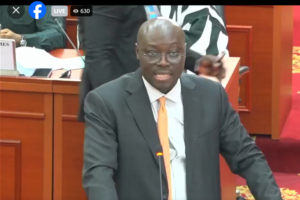
Addressing the Parliament of Ghana, Dr. Forson described the initiative as the country’s first comprehensive reserves-building policy, designed to safeguard the economy and ensure stable participation in the gold market.
“Over the next three years, the Ghana Gold Board aims to mop up about 127 tonnes of ASM gold per annum,” he told Parliament.
Funding and Market Participation
To achieve this objective, the Finance Minister outlined key measures to improve efficiency and sustainability in the artisanal small-scale mining sector.
One major step is ensuring that the Ghana Gold Board is adequately financed to maintain consistent market participation.
“The Ghana Gold Board shall arrange enough funds to acquire about three to four weeks’ worth of gold and ensure continuous market participation,” Dr. Forson stated.
This funding model is expected to stabilise gold purchases, prevent market disruptions, and strengthen Ghana’s ability to build reserves systematically.
Centralised Off-Take and Sales from 2026
Dr. Forson also announced a significant policy shift that will take effect in March 2026.
“The Ghana Gold Board will assume full responsibility for the signing of off-take arrangements and the sale of all ASM gold it procures, effective from March 2026,” he said.
By centralising off-take agreements and gold sales, the government aims to improve transparency, reduce leakages, and increase official export volumes.
Strengthening Reserves and Stabilising the Cedi
The policy forms part of a broader government strategy to rebuild Ghana’s external reserves, stabilise the cedi, and reduce foreign exchange pressures—particularly following years of economic strain and an IMF-supported recovery programme.
Artisanal and small-scale mining remains a significant contributor to Ghana’s gold output. However, the sector has faced longstanding challenges, including illegal mining, smuggling, weak regulation, and informal trading channels that limit official revenue capture.
By consolidating purchases under the Ghana Gold Board, the government expects to:
-
Improve transparency in gold transactions
-
Increase official gold exports
-
Boost foreign exchange inflows
-
Protect small-scale miners from exploitative middlemen
-
Enhance state earnings from gold production
Dr. Forson indicated that the initiative is not only about reserve accumulation but also about creating a more structured and equitable gold market for small-scale miners.
Strategic Economic Implications
If successfully implemented, the policy could mark a turning point in Ghana’s gold governance framework—shifting from fragmented and informal trade systems toward a more coordinated national reserves strategy.
With gold remaining one of Ghana’s most valuable export commodities, the move positions the state to capture greater value from artisanal mining while reinforcing macroeconomic stability.
Disclaimer: Some content on Accra Business News may be aggregated, summarized, or edited from third-party sources for informational purposes. Images and media are used under fair use or royalty-free licenses. Accra Business News, an extension of Accra Street Journal is a subsidiary of SamBoad Publishing Ltd under SamBoad Holdings Ltd, registered in Ghana since 2014.
For concerns or inquiries, please visit our Privacy Policy or Contact Page.
📢 GET FREE JOBS + TIPS
Others are getting instant job updates and career tips on our WhatsApp Channel. Why miss out?
📲 Join SamBoad Jobs Channel Now


