

Gov’t of Ghana Launches 6GB for GHS10 Independence Day Data Promotion

Gov’t of Ghana Launches 6GB for GHS10 Independence Day Data Promotion – ABN

The has secured a special Independence Day data bundle deal with ‘s three major telecom providers, , Ghana, and AT Ghana—offering 6GB of data for just GHS10. This marks a significant upgrade from the usual 1GB or 3GB holiday bundles available at the same price.

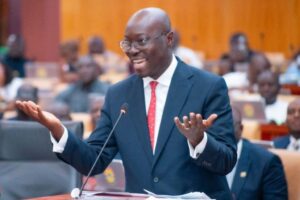
Announcing the offer on his page, the Minister for Communications, Digital and Innovations, , stated, “Under the instructions of H.E. , we have reached a special Independence Day bundle package on all three networks in the country.”

He further highlighted the government’s vision for an interconnected nation, saying, “This highlights our commitment as a government to build the enablers for a truly digitalized Ghana that offers the vast opportunity of the interconnected world to Ghanaians right in the comfort of their homes.”

Many internet users have welcomed the initiative, describing it as a timely intervention in reducing the cost of data. This move aligns with broader efforts to bridge the digital divide and enhance digital inclusion in the country.

Beyond the Independence Day package, the minister assured Ghanaians of more efforts to lower data costs in the long term. “Tomorrow, the Ministry of Communication, Digital Technology and Innovations will outline short, medium and long-term plans towards a sustained reduction in data prices,” he revealed.

Read More
Ghana Loses 2% of GDP Annually to Electricity Sector Inefficiencies – Dr. Cassiel Ato Forson

Ghana Loses 2% of GDP Annually to Electricity Sector Inefficiencies – Dr. Cassiel Ato Forson

Ghana’s is losing approximately 2% of its Gross Domestic Product () each year due to inefficiencies in the electricity sector, according to , Minister of .

Speaking at the National Economic Dialogue on Monday, Dr. Forson highlighted the Electricity Company of Ghana’s (ECG) failure to collect payments from all electricity consumers, leading to an annual revenue loss of about 25%. This translates to approximately $418.2 million in losses caused by power theft and non-payment.

He further disclosed that only 62% of the total purchased by ECG is actually paid for by consumers, and of that amount, only 65% is used to pay suppliers through the Cash Water Mechanism. He also criticized the existing electricity tariffs, stating that about 50% of the cost of providing electricity remains uncovered, adding that tariffs should not serve as compensation for ECG’s inefficiencies.

“These financial shortfalls have hindered the company’s ability to invest in infrastructure improvements and maintain a stable power supply,” Dr. Forson stated.

The impact of ECG’s inefficiencies extends beyond the energy sector, affecting industries such as , , and general economic due to unreliable electricity supply.

Ghana has faced longstanding challenges with its power sector, including the severe energy crisis between 2012 and 2015, commonly known as “.” In response, the signed numerous power purchase agreements with independent power producers, leading to an oversupply of energy. By 2018, the country’s installed generation capacity was nearly twice its peak demand, forcing the government to pay for unused electricity. This situation has contributed to an annual deficit of approximately $1 billion in the energy sector.

Dr. Forson also raised concerns about the Energy Sector Recovery Program (ESRP), a roadmap designed to restore financial stability in the energy sector, stating that it is currently off track. He emphasized the need for urgent reforms and strategic measures to address these inefficiencies and drive economic growth.

As Ghana continues to grapple with energy sector challenges, experts argue that decisive action is required to prevent further financial losses and ensure a sustainable power supply for economic development.

Read More